Inside Job

I fully intended to write a detailed review on this recent Oscar-winning documentary (probably still will) but immediately after watching it, I haven’t a clue where I would even start. I’ve never been more angry in my entire life, and the people responsible for this need to be held accountable. In an attempt to unite the American public behind this cause, Charles Ferguson has set up a facebook group.

Everyone needs to see this film. Buy it, Rent it, Pirate it, whatever it takes to see this film. Although I’m cynical, I truly believe if the 90% of Americans who were exploited by these criminals united in public outcry, it would be too loud for them not to listen.

factoseintolerant

Contact your Elected Officials
Buy at:     Inside Job Amazon

Posted in documentary, politics | Tagged , , , , , , , , , , , | Leave a comment

My Big Fat Greek Dogtooth or Sex, Lies, and a Violent Beating Involving a Videotape

Kynodontas [Dogtooth] is the heartwarming tale of a close knit Greek family and their everyday struggle to…Holy shit! Did that kid just kill a kitten with a pair of gardening shears? Yep. Kynodontas is actually the 2011 Academy Awards best foreign language film nominee from Greece by director Giorgos Lanthimos. The story follows the lives of three kids who are raised in complete seclusion by their parents and taught to believe in occasional half-truths but for the most part just complete falsehoods (e.g. that cats are the most dangerous animals in the world) about the outside world. It is the first film in the best foreign language category this year that I have watched and it has set the bar pretty high, although to be honest not nearly as high as Un Prophete (Audiard, 2009) or El Secreto de Sus Ojos (Campanella, 2009) both of which almost top the list of my all time favorite foreign films.

Pros: Okay so I am uncertain of what to discuss here. There are plenty of outstanding parts to this film but I don’t want to go into any further detail about the plot because most of the entertainment value comes in finding out what messed (fucked) up stuff (shit) these awful (asshole) parents will do to their children next. I can’t speak at any length about the director or his history because a quick IMDB search will tell me that Lanthimos has only two other directorial credits for feature films, neither of which I have ever heard about. And none of the actors have names that I can pronounce with any confidence (and they are about as equally prolific as the director) so I am just going to wing it from here. One of the most frequent (only) things that I had heard about this movie prior to watching was that it had disturbing scenes and was kind of hard to watch (based on the novel stone cold bummer) and given what I have already written about it most people would probably agree. It is true, to some extent, that Kynodontas is disturbing but overall it can’t outshine the real downers like Happiness (Solondz, 1998) and Hard Candy (Slade, 2005) which push the limits of acceptability. Throughout the film, I found myself laughing almost as much as cringing. In my opinion, (which all of this already is so I would not necessarily have to explicitly state that however I did anyway just for emphasis) at times the film felt Wes Anderson-esque and had a much more peculiar and zany atmosphere than that of a bizarre and haunting film the likes of the aforementioned. Don’t get me wrong Kynodontas is fairly strange (I mean really what kind of dastardly (dick-licking) parents keep their children sheltered like that) but all things considered the thematic elements are no more disturbing than Never Let Me Go (Romanek, 2010). It has its moments but for the most part appears like light-hearted trickery rather than outright deceit. So all in all it is an intriguing story, fairly nice camera work (a number of interesting shots), and outstanding acting (who am I kidding I have no idea whether or not it was outstanding but c’mon it was nominated for an Oscar that means it has to be good, right?). A full runtime of about 90 minutes and high quality picture on Netflix instant play so compared to some of the other turds on there (I am referring to you Mind of Mencia: Uncensored: Season 4 and National Lampoon’s Pledge This!) why wouldn’t you watch Kynodontas? Plus it is a foreign film so there is plenty of nudity; seriously it is like a few angles away from being full penetration. (Unfortunately, no nudity in this video but go ahead and watch it just to get a feel for what I am trying to say)

Cons: Again, I am uncertain of what to discuss here because Kynodontas doesn’t really have any negative elements in my mind so I guess I am just going to play devil’s avocado (two 30 Rock references in one article, damn I am good) for a bit. I could see how the film might be considered slow moving to some people and that tends to be a draw back even for myself. There are plenty of scenes where nothing much happens and given that it is in a foreign language, the average movie watcher may not be able to stay focused for the films entirety. If that is the case then I suggest you either nut up or go watch Unstoppable (T. Scott, 2010) which I had originally not planned on seeing but now that I notice it has an 86% on Rotten Tomatoes, I will have to put it at the top of my queue and find out for sure. Other than the pace, I think most people will enjoy. I am done playing devil’s advocate. So I give it:

4 out of 5 broken and bloody upper left (or right) canines

I already felt a bit pretentious (douchey) making a number of references I did in this article but I will go ahead and mention this anyway. Some of the other titles for the article I had been playing around with were Un Chien-dent Andalou and Ode to a Grecian Dogtooth but figured most people wouldn’t get the references, did you? Do they even make sense? You see I knew they wouldn’t be funny.

DonnyBagg

Posted in movies | Tagged , , , , , , , , , , | 2 Comments

Hello Moto

I was instructed to write something about myself for the inaugural address. So, For starters, I like taking long shits on the beach. I enjoy para-sports, such as para-sailing, para-shooting, para-scoping, investigating paranormal activities. I am, however, surprisingly bad at parallel parking.

Other things to say? My name is Nathan. I’m available for catering (exclusively outdoor venues, must have horse shoe pit (I can not budge on this))  between the hours of eight and eight thirty (am & pm). My work number is :587-334-2190 (this is my real # call me day or night, I insist).I have several Gold Metals for skeet shooting, but now its more of a hobby for me. My lawn is decorated, and my favorite movie is Swim Fan.

The Motion Picture: Swim Fan


Posted in inaugural address | Leave a comment

Seeing Beyond Advertisements

Advertisers in popular culture today possess almost every trick in the bag to further corporate sales. The creators behind commercial advertisements no longer hesitate to graphically depict whatever product they are selling in extreme ways, often exploiting social taboos in the process. Apart from selling products to their intended audience, social paradigms are often influenced heavily in the wake of capitalism. In the text, Reading Popular Culture: An Anthology for Writers, Mark Crispin Miller warns in his essay, “Getting Dirty”, that advertising can “tell us something more than we might want to know about the souls of men and women under corporate capitalism.” (Keller, p. 158) This warning carries much more weight when we realize how often we are surrounded by corporate advertisements. Jean Kilbourne argues that “Advertising is our environment. We swim in it as fish swim in the water. We cannot escape it.” (Keller, p. 113) Ignoring corporate advertising is impossible, however, so is denying that it has a huge social impact. To evaluate how advertisements might affect individuals on a deep, psychological level that has adverse social and cultural impacts, you must assess advertisements for deeper meanings behind surface messages. In this instance, I evaluated a car advertisement in Forbes magazine. Forbes, a periodical aimed towards successful business men, was bound to have underlying messages that uphold certain values used by corporate capitalism to oppress.

The ad (which I am trying to find an electronic version of… I’ll eventually get a picture of the ad up) displays a hospitable man, entertaining two guests. It is a beautiful, clear day, and the guests are enjoying the exotic weather, as the house foliage and the sandy terra insinuate the setting is in a warm, tropical climate. The relaxed position of the guests depict them enjoying a leisurely afternoon, as their host grills them large slabs of steak, seasoned with oils and spices. The grill looks very expensive and modern, as does the house in the background. The guests, one a black male, the other an Asian woman, are wearing light, passively colored clothes, sitting at a table set with a white tablecloth, nice table settings, and a glass of what appears to be white wine. The chef is wearing a blue polo, nice jeans, and an expensive watch, while he wields tongs in one hand and a knife in the other. Overall, the setting looks very classy and sophisticated, which would cause any hard-working person to envy the high quality service being provisioned to the guests. Overall, the scene does a lot to ensure that the audience notices the sophisticated nature of the situation, down to every detail presented, from the white wine to the steak spices. Every minute aspect displays that the host is obviously a wealthy, successful, attractive, white male.

Above the graphic, the article reads “Introducing the Equus Service Department Waiting Room,” the first three letters in much smaller font than the latter four. Below, it continues, “See what it’s like to not have to visit the dealership at HyundaiEquus.com Think about it.” The first sentence that is depicted clearly imposes the consecutive words “Service Department Waiting Room” in a threatening way. This little trick serves to have the reader unconsciously despise Service Departments, but more importantly waiting, as the two words “Waiting Room” are even slightly larger. Moreover, the second sentence distinguishes the product’s “reliability”, as it assumes that the Hyundai Equus, not surprisingly absent from the ad, will never have to visit the dealership. The pretentious, condescending finisher, “Think about it,” dares the audience with a witty remark, mocking the audiences intelligence.

It is important to keep in mind this whole while, that the target audience is mostly comprised of business men and women. Forbes magazine’s content consists of articles ranging from new advances in medicine to financial tips for investors. According to research from “America’s MediaMarketing”, a company designed to help advertise in leading magazines, out of 4,288,000 Forbes readers, 68% are male and their average household income is $217,067 (ABC, 2006). The men reading this magazine are obviously successful, so advertisers want to appeal to them with their ads. These men are seeking to enjoy class and sophistication, and the ad is looking to exploit that with the scene they are creating. What’s ironic is that their product isn’t even depicted. In fact, the ad looks to exclusively portray a classy and sophisticated lifestyle even above what the company can provide with their product.

On the surface, the ad innocently attempts to appeal to wealthier men seeking reliability and comfort in their car. However, holistically, the ad implies so much more. First of all, what is especially troubling about the ad is how large the host of the scene is in contrast to the two guests. He is precariously positioned in the forefront of the picture, just to the left of the two guests. His bolstered chest and his emasculating tools, the tongs and the knife, impose his dominating nature. Moreover, his guests are much smaller than him and are displayed with a feminine appeal. The black man is sitting with his legs crossed, a pose that is typically assigned to femininity. The Asian female is laughing with her shoulders exposed as if she’s wearing a night gown, making her look vulnerable. The hosts arm seems to encompass his guests within his domain. This provides two distinct portrayals. As Susan Bordo would agree, the depiction of the host upholds masculinity with a sense of dominance over the two guests, both portrayed in a feminine nature. However, the masculine host is also a white male, whereas the feminine guests are two passive members of minority groups. These depictions force assumptions to be made by the reader, implying that the white male is the successful, responsible, and dominating presence. He, after all, is cooking for the guests. On the surface, the scene looks as though the minority groups are being serviced, which would appeal to vulnerable, oppressed groups. However, if you dig deeper than this superficial depiction, the tools in the cooks hand suggest that he is the wielder of power, and in complete control over his guests. Miller would agree that this is a “clever instance of inversion.” (Keller, p. 155) This appeal to a minority audience, only further subjugates them to the white male after the advertisements implications have been unconsciously noted. Furthermore, the host is holding the knife backwards, as if he were about to stab someone, rather than cut red meat. This suggests that the guests are at his mercy. Moreover, the scene is upholding stereotypes and the proverbial “glass ceiling”. Because the guests are waiting patiently for their food to be cooked for them, it implies that only white males can be given responsibility as a care-giver. Otherwise, the guests would be doing their part to help prepare the meal. After all, they are all enjoying the leisurely afternoon.

All of these are symptoms of capitalist ideology serving to oppress individuals while advancing the interests of corporations through advertising. While addressing this capitalist framework, specifically about matters of racial oppression, Robert Young argues “race oppression dialectically intersects with the exploitative logic of advanced capitalism, a regime which deploys race in the interest of surplus accumulation. Thus, race operates at the (economic) base and therefore produces cultural and ideological effects at the superstructure; in turn, these effects—in very historically specific way—interact with and ideologically justify the operations at the economic base.” (Young, 2006) He continues to argue that race is present in almost every social dialogue, including advertising. However, race is such a touchy subject that it is hardly ever discussed. Not only does that allow advertisements, like this one in Forbes, to exploit race, but it also exacerbates racial suppression. Depictions like these are omnipresent within the capitalist machine, “a system which produces difference (the racial/gender division of labor) and accompanying ideological narratives that justify the resulting social inequality.” (Young, 2006)

Ads in popular magazines are full of rhetoric and depictions that urge customers to buy products. However, in most cases, that is not all the advertisement accomplishes. In most cases, ads have so much influence over their audiences, they can influence social and cultural beliefs without ever letting the reader know. In a magazine like Forbes, aimed at successful businessmen, ideologies that uphold capitalist oppression are forced on their readers. In many other cases, depictions of masculinity and femininity are exploited to continue the cycle of consumerism. Corporate advertisers are very aware of what they are doing. Miller assures, “advertising agencies do plenty of research, by which we can assume that they don’t select their tactics arbitrarily.” (Keller, p. 155) It is very alarming that the environment we are surrounded in every day can influence opinions so heavily. It causes you to wonder whether or not we’re all subject to the decisions of corporate capitalists, whether we realize it or not.

1. Keller, Michael, 2007: Reading Popular Culture: An Anthology for Writers; Jean Kilbourne, 1999: “’In Your Face… All over the Place’: Advertising Is Our Environment’” p. 113; Mark Crispin Miller, 1982: “Getting Dirty” p. 155-158; Kendall/Hunt Publishing Company, Second Edition 2007

2. ABC (Audit Bureau of Circulations); June 1996-June 2006: “Forbes”, AMERICA’S MediaMarketing; accessed online: http://www.americasmedia.com/mediakits/FORBES_MediaKit.pdf, February 10, 2011.

3. Young, Robert, 2006: “Putting Materialism back into Race Theory: Toward a Transformative Theory of Race”; New York University Chairman; accessed online: www.redcritique.org, accessed February 10, 2011.

4. Hyundai. Advertisement. Forbes 28 Feb. 2011: 41+. Print.

Posted in advertising, movies, television | 3 Comments

The Corporation

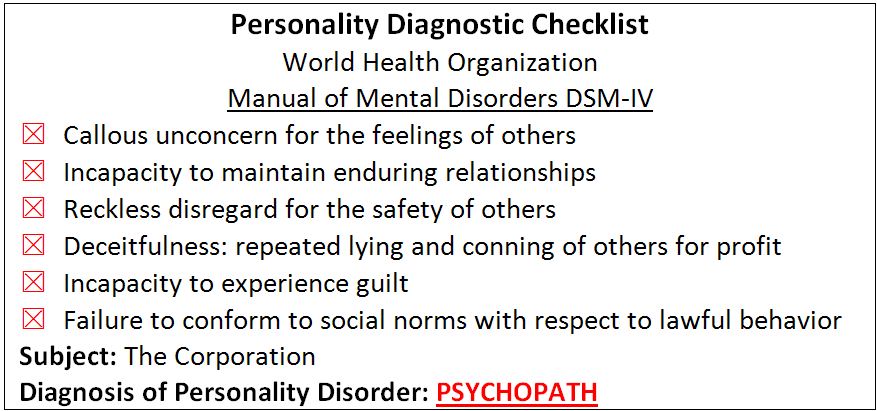
The Corporation, directed by Mark Achbar and Jennifer Abbott, is a documentary about American corporation’s influence throughout the world. Although it was made in 2003, its argument has only gotten stronger. The benefits and consequences of corporations (a legal entity that is created to provide privileges and liabilities distinctly different from those of its members) are shown to viewers. Ok… so the consequences outnumber the benefits about a thousand to one. That’s due to a merciless quest by corporations for profits and for control over many aspects of culture. It takes a critical look at the global economic supremacy of American corporations and the psychopathy of corporations.

It is hard not to start with “psychopathy of corporations;” it is just such a crazy thing to
think. To begin, corporations are viewed as a person, a singular person who can buy property, take out loans, etc. Because of this “person” classification of corporations, the filmmakers took an interesting approach by seeing how this person would be viewed by a psychologist. Turns out the doctor might recommend locking him up.

I was incredibly impressed with the film maker’s analysis of corporations. It was a unique way to look at things, and it really made you think, if a corporation is a person, why do we allow them to operate in the way that they do? They can operate, seemingly unchecked, around the world. As Nobel Prize winner, Milton Friedman said, “How can a corporation decide what’s socially responsible? It’s not exactly their expertise.” Many of Fox News’ personalities would have you believe that government oversight of corporations is one small step away from communism, but that’s just hyperbole. Citizens are held responsible for their actions, and it’s only right that corporations are as well.

Ray Anderson, an excellent CEO featured throughout the film, described an inspiring eagle logo for a principled corporation, but quickly moved on to saying, “Enough bullshit.” Corporations are actually more akin to a whale, appearing gentle, yet capable of swallowing you in an instant if it decides. Often when a corporation is exposed for routine practices behind the scenes, the culprits are scolded for being bad apples, although the whole tree is rotten. In the quest for profits, exploiting middle-class America has become too expensive, and so now they’ve moved on to exploiting the rest of the world. I hate to bash Nike, because they’ve convinced me I love them, but throughout the world Nike exploits workers to make things for .3% of retail price. It’s sad; they go into poor communities and are heralded as heroes for bringing work, and as soon as the people begin to realize that they are being exploited, boom, they move on to find new exploitees.

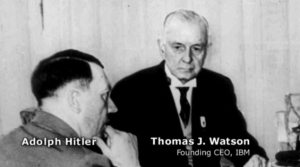
Historically speaking, the corporation is a relatively new concept. One hundred and fifty years ago there were very few corporations, and the chartered corporations that existed were receiving a gift from the public for allowing them to operate. It was after the Civil War that corporate lawyers decided that the 13th amendment, passed to protect newly freed slaves rights, was better used to protect the rights of corporations, since they are people too. Instead of lawyers using the amendment to protect newly freed slaves’ rights, 288 of 307 cases brought before the courts concerned corporations, not newly freed slaves (Plessy vs. Ferguson!?). This is a disgusting application of an amendment meant to protect citizens, but corporations do not care about committing disgusting acts. In the film, the most disgusting example was IBM during WWII (thank god New Jersey Rep. Rush Holt beat Watson). IBM maintained the system that was used to keep track of the extermination of millions of people in Nazi Germany, servicing the machines monthly on-site at concentration camps and railroad stations. IBM sadly is not the only corporation who benefited from the Nazi movement in Germany, and they all knew that it was wrong (Coke even covered its tracks, Hello Fanta!). An acquaintance of Watson said he didn’t want to do business with Hitler, not because it was wrong, but because he thought IBM’s

public image could be stained. Corporations are unconcerned with being upstanding members of society, and concerned only with the bottom line and making as much money as possible for stock holders. In fact, they are legally bound to put the bottom line ahead of anything else. The corporation ignores stake holders, which are people in workforce or community. For corporations, despotism and tyrannical regimes are great; the leaders have the workforce under control, and anyone with the balls to stand up is just “taken care of.” The last example from the movie I’ll mention is the one that made me decide that spending $7.00 on organic milk was worth the cost. From Food Inc, I knew that Monsanto was not a saint of a company, but after seeing the story on rGBH and rBST, I would say Monsanto is straight evil. rBST or Posilac is about the most disgusting drug I have ever heard of, and I recommend everyone does a little research into the drug that is banned in Canada and the European Union, but is still widely used in America. Many people who have tried to expose this story to the public have been silenced, but this film allowed the silenced to speak.

Externality is a term used by economists, describing how a third party is affected by a transaction between two other parties. Corporations are, by design, created to internalize profits and externalize everything else. Unfortunately, the American public is the third party who gets to carry the load for decisions made by big business. Whether it is harms to public health like pollution, synthetic chemicals, chemical spills, and dangerous products or harms to the workforce like layoffs, union busting, sweatshops, or dangerous workplaces, it is the American public who suffers. When corporation’s reckless financial activity lead to the recent recession, the average American is the one who really suffers, but not one person has been held accountable for their bad decisions crimes. Government needs to hold them accountable, and increase regulation to prevent history from re-re-re-re-repeating itself.

With so many examples of corporation’s effect on our political system around the country, it is hard not to slip into that subject. There are so many things I would like to scream about, and it’s hard to know where to start. I’ll move on to the federal budget discussion (If I start talking about the crap going on in states, I will never finish this). I’ll start with the fact that the American public overwhelmingly (roughly 80% according to recent NBC/WSJ Poll) support raising taxes on millionaires, and recalling the Bush tax cuts for the richest of Americans. Now, if our elected officials are supposed to speak on behalf of the people, where is our voice being lost? It’s being lost when the elected officials answer to someone other than the voters, their campaign contributors. Just look at Wisconsin (couldn’t stay away from the states, damn), the people in the state are against the governor’s plan, yet he refuses to back down, because unions are bad for corporations, even in the public sector. 93% of corporation’s campaign contributions go to Republican candidates, the same people claiming Bush tax cuts must be extended to create jobs. Where the hell are all of these jobs? There is not a shred of evidence to support the hypothesis that cutting taxes on the rich will create jobs, instead they will just enjoy their heavier wallet. Apparently the best

way to cut (a generous term when you look at percentages) the budget is to remove heating subsidies for poor families, not to cut the 40 billion dollars in subsidies to the oil companies, the most profitable companies on the planet (the top five companies reported profits… profits of one trillion dollars for this decade). Every single Republican voted against the bill to cut oil subsidies, in the name of fiscal responsibility I’m sure. Helping the richest of all people make more money takes priority over assisting the people who cannot afford to keep their family warm during winter.

This was a documentary I think everyone should see, and I think Mark Achbar and Jennifer Abbott did a great job on the film. I think that the film could be structured better to allow for a superior flow throughout the movie; sometimes it seemed like the film jumped around, but all the information in the film served a purpose. It did an excellent job of giving a historical context for corporations. The documentary is available on Netflix Instant Play, and if you don’t have Netflix… GET IT! This turned into a little more of a rant than a review of sorts, but I think that watching this film will make anyone want to rant, and I didn’t even get to everything I’d like to talk about. For example pollution, which isn’t going to hurt our eventual robot overlords, it’s only going to hurt us. A speaker on the film summarized pollution as generational tyranny, taxation without representation of the generations to come. It is hard to know if the future will have to deal with all the problems, or if we’ll hold to corporations responsible.

factoseintolerant

Achbar, Mark, and Jennifer Abbott, dir. The Corporation. Narr. Ray Anderson. 2003. Web. 28 Feb. 2011. .

Posted in documentary, politics, reviews | Tagged , , , , , , , , , , , , | Leave a comment

It’s too hard to watch

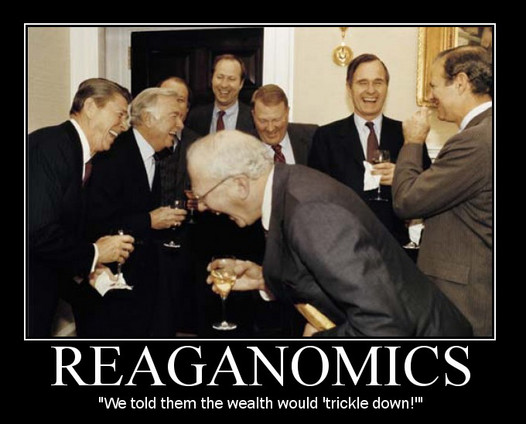
This will not be the only time I address this issue, I promise you, but capitalism has done all it can do in our country. It is time that we open our eyes to whats really going on and realize the impacts on society that are clearly evident. How is our country bankrupt? I understand that our country is in more debt to China than we can probably ever pay back, and Reaganomics didn’t help matters any, but why is unemployment on the rise? Why can’t we afford extra-curricular activities in our school districts? Why does 2% of the population have more money than the rest of us combined? Why isn’t anything being done to reverse this?

Is it surprising that the highest campaign contributors are corporations? When you think about how much it cost to run for President, it’s shouldn’t be. Is it surprising that most of those contributors donate to both candidates? And not just to the candidates, but to the National Parties as well? The motive is fairly obvious. Corporations want to make sure they’re being protected by the government, regardless of who wins.

And protected they are. Right now, large corporations are asking for tax cuts. Yep, cuts, when our nation is facing an enormous debt crisis and we’re battling recession. The people who have the money are paying less than usual, and the government is expected to be able to afford to address social problems effectively. You don’t need to be an economist to realize that it is absurd for our nation to be self-sufficient and prosperous when a ridiculously small demographic controls an overwhelming majority of the wealth. It takes money to make money, and with almost no money (relatively) in circulation, it shouldn’t be surprising that our economy, locally and nationally, is tanking. We’re turning our recession around, but at what cost to Americans?

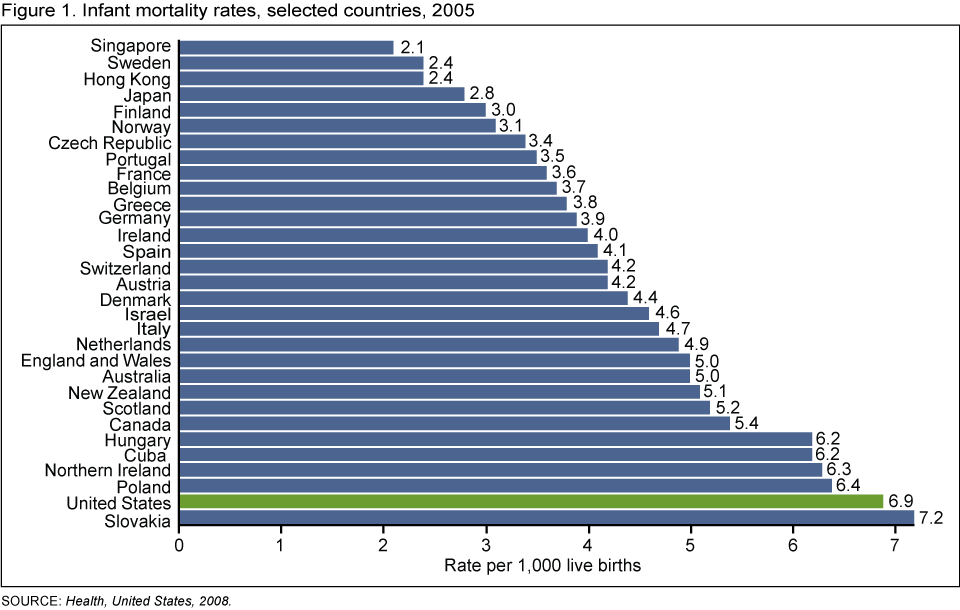
Well, for one, income taxes are expected to rise, on the state and federal level. If you’re a small business owner , you already know how hard it is to battle Wal-Mart, and with the new health care plan (which is absolutely necessary), you now have to afford to pay your employees’ benefits. If you’re a teacher, or any government employee for that matter, you might be a little worried you’re collective bargaining rights are in jeopardy. Our unemployment rates are higher than they have ever been in the history of our nation. The stock market crashed as hard as it did before the Great Depression. We have the second highest infant mortality rate among developed nations (just behind Slovakia). The government can’t even pass a budget, and they’re threatening a shut down of the federal government. Yet, we have one of the highest GDP’s in the world, and still wealthier than almost every other nation (at least we can thank corporations for something).

If anyone brings up government intervention, republicans go nuts. I can just hear it echoing now, “Why should I have to pay for them?”, “them” being Americans requiring help from social programs. What’s ironic is that if we keep heading in the direction we’re heading, those same conservatives are going to require the same government assistance. If anyone argues that we should institute much higher tax burdens on corporations, they’re labeled a socialist.

According to Sean Hannity of Fox News, “if you’re against capitalism, you’re against freedom.” Oh, Hannity, the way you emasculate those evil, violent socialists in the name of freedom is so revering. It is the media that makes socialism a four-letter word. Not surprising, these media outlets are owned and supported by corporate funding. Remember, corporations own everything. Through the media, corporations also have us insisting that regulating the economy is a slippery slope. They have most of the nation believing that it is not the governments place to take away our “financial freedom”. Just like Hannity said, it isn’t our right to take away their money. As we defend our financial freedoms, we become vulnerable to the exploitation of capitalism. The rich keep getting richer, and we keep getting poorer. The poorer are the ones who are left with the financial burden of keeping our nation afloat.

It isn’t freedom you’re against if you question capitalism. In fact, it’s equality you’re against if you don’t question it. It’s capitalism that is creating the division between rich and poor. And it is capitalism that is allowing for corporations to be in control of our government. Capitalism and democracy weren’t meant to work together this long. The majority is supposed to be the most powerful entity in democracy, but in capitalism, a miniscule minority owns nearly all the money, (which equates to power). The two don’t harmoniously coincide like the picture Sean Hannity is painting. It’s about time the majority reclaims the power it deserves.

Klein, Ezra. “What Americans think about income inequality in one graph.” Graph from Michael I. Norton, Harvard Business School, and Dan Ariely, Duke University. The Washington Post 22 Feb. 2011. Web. 25 Feb. 2011.

Posted in politics | Tagged , , , , , , , | 2 Comments

The Wørd–New Country for Old Men [3-1-2011]

Everyone should watch this, comedy sure can be informative…

The Wørd–New Country for Old Men

Sadly our host does not allow embedded Flash videos, hopefully we can figure out someway to put them on the blog at some point.

Posted in comedy, politics, television | Tagged , , | Leave a comment

“Your Psychic Child”

Its book review time. Today’s book is “Your Psychic Child.” Now before we get too far into the review I would like to give a brief disclaimer; I have not read this book. My review will be based largely on broad, sweeping generalizations, or assumptions I’ve formed about this book based on where its located in the book store, the synopsis on the back of the book, and of course the title.

You may say, “Oh he is just judging this book by its cover.” False, I’m not even judging this book; I am judging the people who would read this book (look who’s prejudice now).  If I were to judge this book by its cover, well I would have to say it’s probably about gardening. Just because I didn’t read this book, doesn’t mean I can’t give an accurate summation of its content. Not only can I accurately summarize the book’s content, I can do it with one word: stupid. Bingo, job done, hit the showers.

See the book just doesn’t have enough substance to merit a whole review of it. So I must explore different avenues, ask the real, hard hitting questions. Questions like how does this book get published? Who would write such a book? Most importantly, who would read such a book? Presumably, It is written for parents of psychic children, but due to the lack of actual psychic children, one can infer its written for stupid people who have children. But we will dive into that later.

First things first, who wrote this inspired piece of literature? Well, it’s a woman with the auspicious name of Sara Wiseman. Mrs. Wiseman is an author, psychic counselor, and proud mother of four. I assume her children are psychic, but I don’t know for sure; I can’t read minds. If you need to know more about her please visit her aptly named website, http://www.yourpsychicchild.com where you will find gems like this: “A final word: this website is for those interested in the Divine, light, love, clarity, transformation, healing and the confluence of intuition and spiritual growth. Dabbling in darker stuff? Please stay clear.” Oh, I almost forgot, the website also hosts her bands music. It’s for children, and obviously it’s a free download, Sara isn’t in it for the money.

Now, to the people who visit her website/read her books. This book was found in the “New Age” section, so using deductive reasoning one presumes that this book is intended for the members of our society known as “weirdos.”

Back to the question, “who would actually buy this book?” Assumption being that it’s for parents of psychic children who wish to be better prepared for raising the aforementioned children. Ok, I’ll bite. The book states that it’s to help bring out their powers, to make them stronger. But why? If, like the book contends, there are more psychic children in this generation, shouldn’t this book aid parents in identify the symptoms early on, so they can be taken to some sort of secret government research facility to be disposed of? At the very least shouldn’t it help parents safeguard their thoughts? I think It should.

Who wants a pre-teen all up in their head, fooling around with their memories, probably spilling chocolate all over the place, I certainly don’t. So if you have a psychic child, and you refuse to acknowledge that it’s a monster, one that will probably use its power for evil and destroy the world, then go ahead and buy this book. Strengthen his/her powers.

I’m not afraid of your kids! Worst case scenario you’ll just makes some sort of Criss Angel knock off. I’m not advising you to do this, I mean, best case your kids grows up to be a total weirdo (like yourself). The kind of kid that sports scarves indoors and wear gloves without fingers. Maybe they will grow up to think they’re actually psychic, maybe even write a book about it, who knows, no one can see the future.

So there you have it, a stupid book, by a stupid author, written for stupid people. Please join me next week when I review “The 7: Seven Wonders that will Change your Life” by Glen Beck

Posted in comedy, reviews | Tagged , | 3 Comments

Two Guys, a Girl, and a Noodle Place or A Man, a Plan, a Noodle Shop, Panama

San Qiang Pai An Jing Qi [A Woman, a Gun, and a Noodle Shop] is a 2009 Chinese remake of the Coen Brothers 1984 film Blood Simple by director Yimou Zhang (or Zhang Yimou, I have never really been certain how Chinese names translate to English). It is a darkly farcical tale about a cheating wife and a vengeful husband. On paper, it sounds like a great idea (I like Chinese films, I like the Coen Brothers, I like noodle shops) but the final product seems to lack that ja ne sais quoi factor. I am still uncertain where the movie went wrong but it did fail to meet the lofty expectations I had put forth.

Despite failing to impress me personally, San Qiang Pai An Jing Qi had a number of redeeming qualities that make it a worthwhile film. Yimou Zhang also happens to be the same person who directed Hero, House of Flying Daggers, and The Curse of the Golden Flower (the only movies of his that I have watched) and even without knowing his name, within the first ten minutes you can see his touch showing through. Each character is elaborately dressed in a different brilliantly colored outfit that clash starkly against the barren set. This effect is done with greater success in his other movies which usually feature characters flying around swinging katanas at each other but does not go unnoticed in this film. To be perfectly honest I could watch people dressed like that wander around the screen for 90 minutes doing just about anything and still be satisfied. Zhang (or Yimou, I think he goes both ways) also has a number of outstanding shots in the film, one of the first scenes when they are artfully spinning dough (or something) does a great job of capturing your attention early on and impressing you with the mundane, which is a Coen Brothers staple. The film does an outstanding job cinematicgraphicly, cinematographyafficly, I mean it does an outstanding job with the cinnamon photography, the fucking way the film looks, god. And finally, San Qiang Pai An Jing Qi is enjoyable because as someone who has viewed all of the Coen Brothers work (brag) over the years, it is nice to see someone elses take on their film. Having just seen Blood Simple for the first time last year, most of the scenes were fresh in my memory and it was interesting to see how the different directors unfolded the similar actions. This of course would only be a perk to someone who gives a shit about this sort of thing, so if you saw Drive Angry 3D or Big Mommas: Like Father, Like Son this weekend, don’t go renting San Qiang Pai An Jing Qi. That is about all I have to say on the positive side of things.

First off, I think the Coen Brothers are stupendous, some of the best directors of our time, they are a big part of why I enjoy watching film, they are the antithesis of Friedberg and Seltzer (which is the highest complement I can give a director) and even on my best day or my best best day I couldn’t come up with a facsimile of their worst rough draft. That being said…I am not a huge fan of Blood Simple. The Coen Brothers have two types of movies (in my opinion) True Grit-A Serious Man-No Country for Old Men-The Big Lebowski-Fargo and then everything else, Blood Simple being in the latter category. So Zhang decided to do a remake of one of their lesser (I don’t mean bad) movies (albeit their first) and that is strike one. Not 100% sure how many strikes there are in baseball but I will keep track of them anyway. The story is complex enough that if you have not watched Blood Simple it would be fairly suspenseful, there isn’t anything wrong with the writing it just does not have the same quality as their top ranked movies. Secondly, the best part of a Coen Brothers film is the dialog. They are very meticulous in their writing and invent some of the most amazing exchanges between characters I have ever witnessed. Unfortunately most of the entertainment is lost in translation, and the feeling just isn’t the same. It is one of the reasons why foreign comedies are hard to watch, the comedic timing is off or hard to find. Finally, a lot about a movie can be decided by expectations in my experience. I thought Notting Hill was pretty good because I was expecting a bowl of shit and I was not blown away by Inglourious Basterds because Pulp Fiction is one of my all time favorites. I was expecting to be impressed with San Qiang Pai An Jing Qi but was instead only entertained. It is a solid movie but not outstanding. So I give it:

57,372,885,813 out of 95,621,476,355 stars

It is to be noted that I said nothing about the acting abilities of anyone in this film. That would be because I am a poor judge of good acting in American cinema, so I am almost completely lost when it comes to foreign film. I saw faces on the screen saying words I didn’t understand and they looked believable to me so A+…or was I doing stars? Come to think of it how many strikes did I give out? Son of a bitch.

DonnyBagg

Posted in movies | Tagged , , , | Leave a comment

To Whom It May Concern

This is a post describing what I will be writing about on this blog. I will be writing movie reviews on this blog. Jared said I should have an introduction describing what I will be writing about on this blog. Jared asked me to write movie reviews on this blog. I will be writing movie reviews on this blog. My name is Alex, I watch movies, and I will be writing movie reviews on this blog.

Posted in inaugural address | 1 Comment